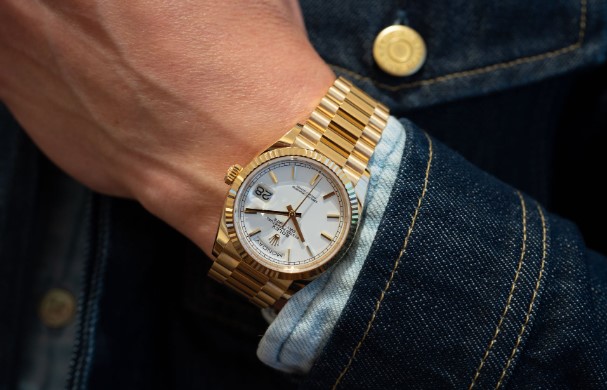
Why UK Buyers Are Returning to Replica Watches in 2025 — And How to Choose Without Regret
In the UK, watch taste has always been quietly sharp. People notice finishing. They notice proportions. They notice whether a bracelet sits with confidence or feels like it’s trying too hard. And in 2025, something interesting has happened: replica watches are no longer discussed only as “cheap copies” in the corners of the internet. They’re being evaluated the way enthusiasts evaluate any watch — by materials, execution, and long-term wearability.
This isn’t hype. It’s a shift in buyer behaviour driven by real-world pressure: genuine prices keep climbing, availability remains unpredictable, and the risk of wearing an expensive watch in public has become a daily calculation in cities like London and Manchester.
A Market That Now Rewards Quality, Not Noise
The biggest misunderstanding newcomers have is assuming all replicas are similar. They aren’t. The difference between a low-grade piece and a high-grade build can be felt within seconds: the weight distribution, the crispness of dial printing, the solidity of the clasp, the smoothness of the crown when winding.
The higher end of this market is now shaped by factories and workshops that treat production like engineering rather than imitation. That’s why UK buyers increasingly start with reputable educational resources and comparisons before choosing a model, a factory version, or a seller. A solid starting point for understanding modern replica watches in the UK is simply reading a guide that explains what “high-grade” actually means, instead of relying on vague marketing claims.
What “High-Grade” Actually Means in 2025
In practical terms, high-grade replica watches are defined by a small set of fundamentals. When these are right, the watch feels convincing. When they’re wrong, nothing else matters.
- Case and finishing: Clean brushing, confident polishing transitions, and accurate proportions that don’t look inflated on the wrist.
- Crystal: Sapphire clarity matters more than most people think — it changes how the entire dial reads in natural light.
- Dial execution: Printing sharpness, marker alignment, lume tone, and the “depth” of the dial surface.
- Bezel and crown feel: The tactile experience often reveals quality faster than a photograph can.
- Movement stability: You don’t need complexity — you need consistency. A stable movement is the difference between enjoyment and frustration.
- Bracelet integrity: Solid links, tight tolerances, and a clasp that closes with certainty — not a rattle.
Why UK Buyers Prefer the “Wearable Alternative” Mindset
There’s a practical, very British logic to the shift. Many buyers are not trying to replace genuine watches. They’re choosing a daily-wear piece that looks refined, feels substantial, and avoids the financial and safety pressure that comes with wearing a five-figure watch in public.
That mindset is also why the best-performing replica models in the UK tend to be the ones with clean design language and strong real-world usability: classic divers, balanced date watches, and modern sports styles that work with daily outfits rather than shouting for attention.
The Most Common Mistakes (And How to Avoid Them)
Most disappointing purchases come from the same small set of mistakes:
- Buying purely by price: “Cheap” is rarely cheap once you factor in re-buying after disappointment.
- Ignoring version and factory details: In 2025, version matters more than model name.
- Trusting generic stock photos: Real photos and clear specs are a basic expectation.
- Over-fixating on perfection: Even the best builds are about the total wearing experience, not microscopic fantasy.
- Skipping research: Ten minutes of reading can save months of annoyance.
Final Thoughts
Replica watches in 2025 are not “one thing.” They’re a spectrum — from flimsy throwaways to genuinely impressive daily-wear builds. The UK market is increasingly separating the two. Buyers are more educated, more selective, and far less interested in hype than they are in honest quality.
If you approach this space with the right priorities — materials, execution, stability, and realistic expectations — you can end up with a piece that feels quietly confident on the wrist. And that, more than anything, is what modern buyers are really paying for.